

African & African American Spiritual Traditions Taking A Stand
- Ashley Slade

- Dec 12, 2025
- 3 min read
Updated: Dec 13, 2025
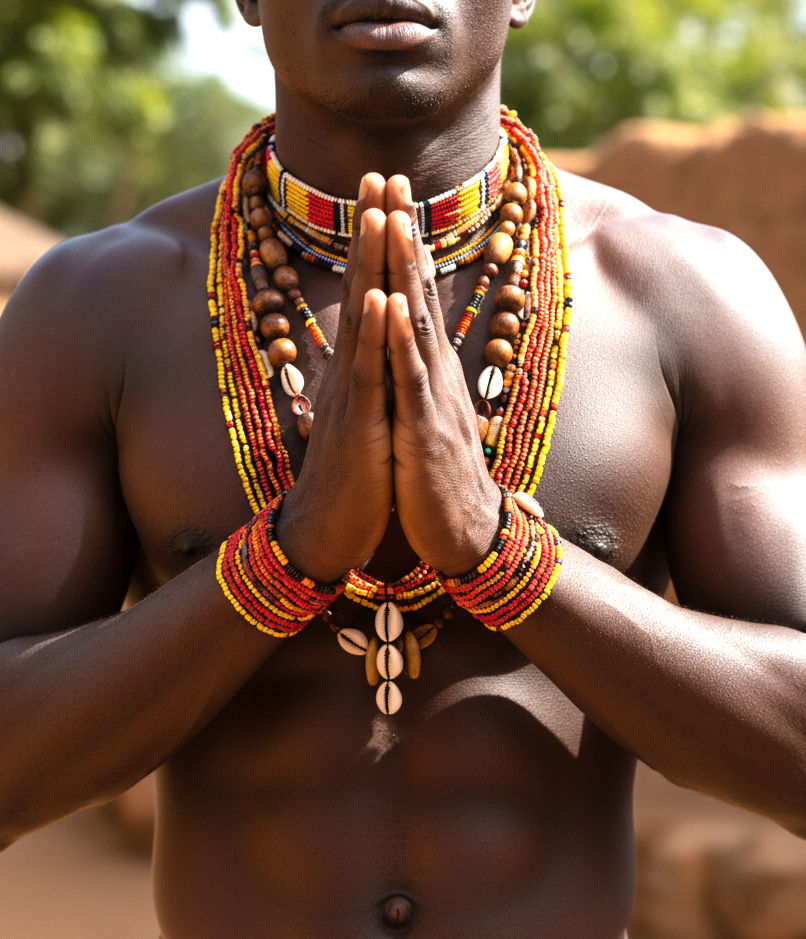
Spiritual Renaissance: Traditional African Faiths See Global Resurgence
A significant spiritual movement is gaining momentum across the globe, marked by a resurgence of interest in traditional African spiritualities. Far from being relics of the past, ancestral veneration, Ifá, Haitian Vodou, and Brazilian Candomblé are increasingly becoming sources of identity, pride, and spiritual fulfillment for people of African descent and a growing number of spiritual seekers worldwide.
Reclaiming Heritage and Identity
For many, particularly in the African diaspora, turning to traditional African religions (TARs) is an act of reconnection and resistance. These practices offer a direct link to a heritage that was systematically suppressed during centuries of slavery and colonialism, providing a powerful counter-narrative to Eurocentric views that often mischaracterized them as "primitive" or "evil."
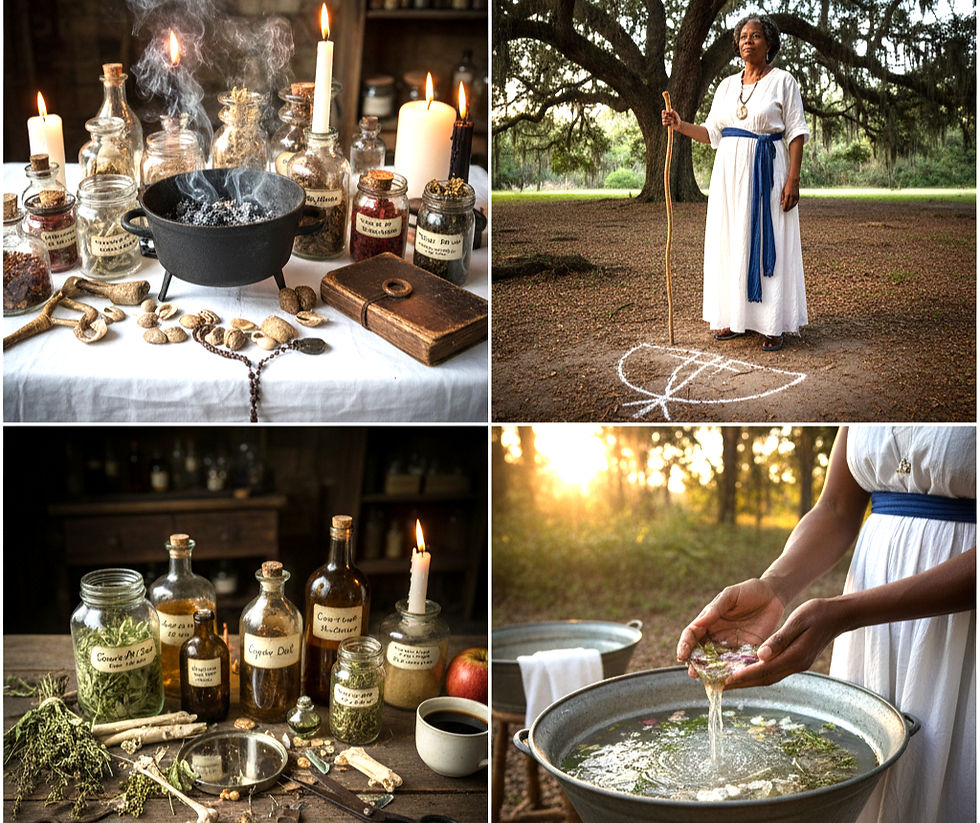
Rachel Elizabeth Harding, an associate professor of Indigenous spiritual traditions at the University of Colorado Denver, notes that these traditions play a vital role in affirming Black identity and providing solace, paralleling the historical role of the Black church but offering a spiritual path considered endemic to sub-Saharan African culture. "The key characteristics of the religions that Black people created on this side of the Atlantic everywhere... are that these are our means by which we affirm the deepest humanity of people," she stated in a 2024 interview with Religion News Service (RNS).
________________________________________________________________
The Global Spread
While many areas in Africa itself have seen a massive growth in Christianity and Islam, the influence of TARs in the diaspora, often in syncretic forms, is undeniable.

Yorùbá Devotion: The Yorùbá religious culture, centered on the worship of the Supreme Being and a pantheon of deities called Orisha, has become a truly global religion. Scholar Terry Rey estimated in 2008 that there are nearly 10 million practitioners of this West African spiritual tradition across the globe, with a predominately Latin and African American following in the United States, as well as communities in Europe, Asia, and Australia (Temple Now, 2008). Some estimates place the total number of practitioners worldwide even higher, at over 100 million.
Diaspora-Born Traditions: Practices like Santería (Cuba), Candomblé (Brazil), and Haitian Vodou are living testaments to the resilience of African spirituality, having adapted and survived in the New World. They offer a comprehensive worldview based on community, respect for nature, and ancestral connection.
________________________________________________________________

Modern Tools, Ancient Wisdom
The resurgence is being amplified by modern technology. Social media platforms like Instagram and TikTok have become "virtual temples," where practitioners share insights, build global communities, and offer deep dives into spiritual concepts like the Orisha pantheon or ancestral altars. This digital renaissance helps to counter long-standing misinformation and foster a collective, educational spiritual awakening.
The practices themselves are inherently holistic and often emphasize the interconnectedness of all things—physical, psychological, and spiritual. Core components underpinning African spirituality include a focus on order and balance, social and spiritual hierarchy, and cyclical existence (Adofo, 2016, cited in The Southern African Journal of Missiology). Ancestral veneration, libation, and seasonal rites are seen not as superstition, but as a "living technology" of memory and spiritual guidance (Universal Life Church, 2025).
________________________________________________________________

A Call for Decolonization
Academics and cultural commentators are actively working to decolonize the study of African spiritual systems, rejecting the "primitive" label and recognizing their complex philosophical and theological depth.
This cultural and academic renaissance signals that for a growing number of people, reclaiming this spiritual path is a powerful and ongoing way to honor the past while actively rewriting their future.
Citation Note:
The information in this article is synthesized from recent reporting and academic analysis of the trend toward reclaiming traditional African spiritualities. Key sources include:
Temple Now (2008). "Traditional African religion attracts global devotees."
Religion News Service (RNS) (2024). "African spiritualities are attracting Black Americans as a source of pride and identity."
FunTimes Magazine (2025). "Reclaiming African Spirituality In The New Year 2025."
Universal Life Church (2025). "How Is African Traditional Religion Different From Christianity?"
Pharos Journal of Theology (2024). "Resurgence of African Spiritualities in the New Prophetic Churches."


Comments